

Bringing a new baby home is exciting but it can be a big change for your cat. Helping your cat adjust is important for a happy home and percent accidents.
Your cat and baby can become great friends with patience and planning. Let’s learn how to help your cat get used to the new addition to your family!
Preparing Your Cat Before The Baby Arrives
Gradual Changes
Introduce new baby items slowly. Bring in one or two items at a time, like a crib or stroller.
Allow your cat to explore these new items at its own pace. Let your cat sniff and investigate to get familiar with the new smells and objects.
Cats love making new items in the home by rubbing their scent glands on them. So let your cat have a sense of ownership first.
Adjusting The Routine
Chances are that you might have to make changes to your cat’s routine when the baby arrives. Gradually change your cat’s feeding and playtime schedules to the new timetable
This helps your cat get used to the new routine without the sudden shock of a major change.
Cats love a fixed routine and the earlier you set it up, the easier it will be for your cat to adapt.
Training
Many cat owners look confused when I say that it is possible to train a cat like a dog. You just need a lot more patience.
Cats prefer to have slaves, not masters.
Reinforce basic commands like sit and come. Use positive reinforcement such as treats and praise to encourage good behavior.
This training helps manage your cat’s actions around the baby and reduces stress for both you and your pet.
Introducing The Baby To Your Cat
First Impressions
Before bringing your baby home, allow your cat to get used to the baby’s scent. Place a blanket or clothing item with the baby’s scent in an area where your cat spends time.
This helps your cat associate the new smell with something safe and familiar. And when it comes to cats, it’s all about the smell.
When the day comes to bring your baby home, keep introductions short and calm. Let your cat observe the baby from a distance, allowing it to get used to the new presence without feeling threatened or overwhelmed.
Supervised Interactions
During the first few interactions between your cat and the baby, always supervise closely. Do not leave your baby alone with your cat regardless of how gentle you think your cat is.

Start by keeping the baby at a safe distance, allowing your cat to approach if it feels comfortable.
Gradually increase the time they spend together under your supervision, observing their reactions and ensuring both are calm.
Reward your cat with treats and praise for calm behavior to reinforce positive associations with the baby.
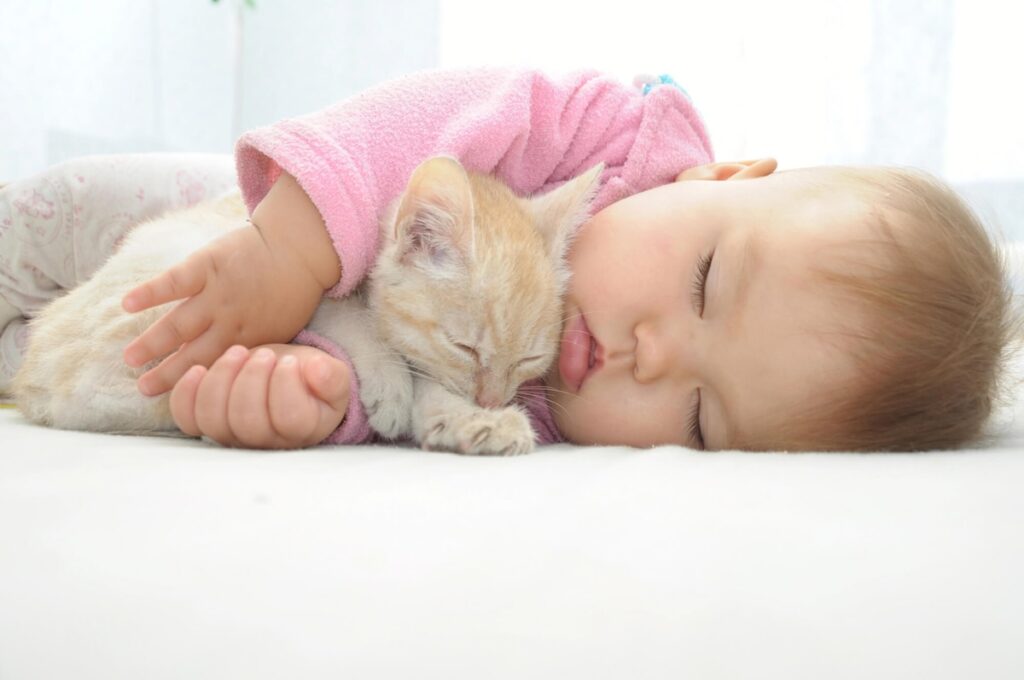
The best way to know that your cat is cool with your baby is when it can sleep or lie next to the baby calmly.
Creating A Safe Environment
Designated Spaces
It’s important to ensure your cat has a safe space to retreat to when the baby arrives. Your baby’s crying and smell might be too overwhelming for the cat.
This could be a cozy corner with its bed, toys and some familiar items.
Create baby-free zones where your cat can feel secure and undisturbed. This helps your cat have a place to relax away from the new changes in the household.
Safety Measures
Use baby gates to separate areas of your home if needed. This allows your cat to have its space while keeping the baby safe.
Make sure the baby’s crib and play areas are cat-proof. This includes securing any loose items and making sure your cat cannot climb into these spaces.
Maintaining Your Cat’s Well-being
Regular Attention
It is easy to start ignoring your cat when you are busy looking after your baby. But don’t forget that your feline friend is family too.
It’s important to spend quality time with your cat daily to ensure they feel loved and secure. Dedicate specific times for cuddling, playing and bonding.
This consistency helps maintain your cat’s emotional well-being and not make it feel left out.
Mental Stimulation
To keep your cat mentally engaged when you’re busy, provide a variety of toys and puzzles. Interactive toys, like feather wands and laser pointers, can keep it entertained.
Rotate these toys regularly to maintain your cat’s interest and prevent boredom.
Puzzle feeders can also be a great way to stimulate the mind and provide a fun challenge.
Handling Behavioral Issues
Signs of Stress
Identify signs of stress or anxiety in your cat, such as:
- Excessive grooming
- Hiding
- Changes in eating habits
- Hissing and yowling
Address these issues promptly using positive reinforcement, like treats and praise, to encourage calm behavior.
Seeking Professional Help
If behavioral problems persist, consult a vet or pet behaviorist for guidance. They can provide expert advice tailored to your cat’s needs.
Please do not rehome, abandon or lash out at your cat.
It is just reacting to having a new family member at home and can be taught to live happily with your baby.

Nora is a passionate writer with a love for books, animals, and gardening.
Her writing is inspired by her two cats and a loyal dog, who serve as her muses, as well as the tranquility she finds in her garden.
With a knack for storytelling, Nora offers a unique blend of book recommendations, heartwarming animal tales, and gardening insights.
Whether you’re interested in paws, petals, or page-turners, Nora’s world is a treasure trove of engaging content.